
Company principle · 8 June 2026
Value Engineering Without Diluting the Brief
How EPIN TOMCIM approaches cost, performance and customisation by reducing process waste while keeping the entrance specification visible and reviewable.

Why value needs a clear definition
In the entrance-door market, “premium” can describe engineering, materials and project service, but it can also reflect brand positioning, channel layers or promotional cost. At the opposite end, a low purchase price may conceal compromises in the frame, leaf, seals, hardware, finish or installation interface.
EPIN TOMCIM's position is straightforward: value engineering should remove avoidable cost from the process, not quietly remove requirements from the product. Buyers should be able to see what is specified, what is optional and which evidence applies to the proposed entrance.
Begin with the performance brief
A useful conversation starts with the building and destination rather than a broad label such as “high-end door”. Opening size, exposure, thermal target, acoustic objective, security expectation, access control, finish, quantity and local compliance route all influence the right construction.
The 2547 system is one reference from the company's current technical platform. Its documented construction includes:
- A PA66 GF25 insulating strip within a thermally separated steel-frame approach.
- Grid-form internal reinforcement to support leaf rigidity.
- Water-blown polyurethane foam as part of the insulated core strategy.
- Automotive-grade EPDM perimeter seals.
- A referenced 45-degree sealing interface designed to increase contact area by approximately 40% in that configuration.
- Acoustic felt and 18 mm low-emission OSB within selected multi-layer leaf constructions.
The China-market article associates the 2547 name with a 25°C comfort concept and a 47 dB acoustic reference. For international specification, these figures are not treated as universal product ratings. The exact acoustic metric, test method, specimen, boundary conditions and supporting report must be identified before they are used in a quotation or compliance submission.
Scale should remove waste, not material
Repeatable procurement, controlled drawings, standard production checkpoints and coordinated packing can reduce rework and unnecessary handling. A mature manufacturing process also makes it easier to identify where project-specific engineering is required and where a proven reference detail can be reused.
This does not mean that every project has the same price. Size, configuration, finish, hardware, test requirements, packing and destination still change the commercial result. It means the quotation should be built from the approved scope rather than from an unexplained market label.
Customisation belongs inside the system
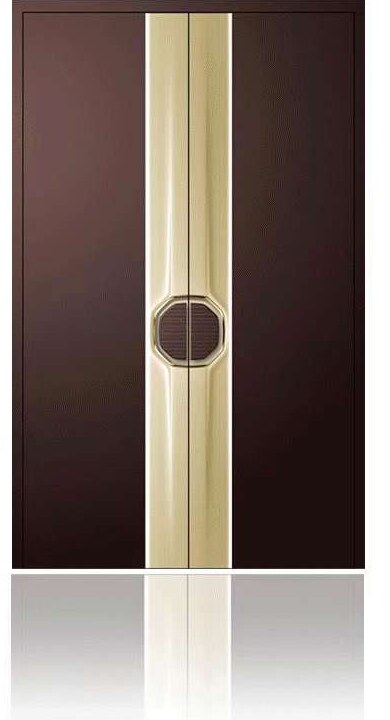
An entrance is part of the architecture. Customisation therefore needs to cover more than the face pattern. Leaf arrangement, frame and threshold, wall interface, swing, sidelights, finish, pull handle, lock, smart access and interior coordination should be resolved together.
EPIN TOMCIM describes this as a project-specific entrance system: enough controlled structure for repeatable manufacture, with enough design flexibility to respond to a residence, development, hospitality project or distribution programme.

Four principles behind the quotation
- Technology: choose a construction that responds to the stated requirement.
- Quality: make materials, drawings and checkpoints reviewable.
- Customisation: coordinate architecture, operation and hardware as one entrance.
- Value: simplify the route from specification to manufacture without hiding reductions in scope.
What to send for a useful comparison
For a like-for-like proposal, share the opening dimensions, door arrangement, project location, quantity, drawings or reference images, required standards, target performance and preferred finish. We can then separate the required configuration from optional upgrades and identify the documents available for review.
This article is adapted from a brand statement first published by EPIN TOMCIM's official WeChat account on 8 June 2026. Technical references remain configuration-specific and should be confirmed against current controlled drawings, test evidence and destination requirements.