
Technical note · 22 May 2026
How to Read Thermal and Acoustic Door Claims
A buyer's guide to separating a comfort concept, a component value and a tested complete-door result before specification.
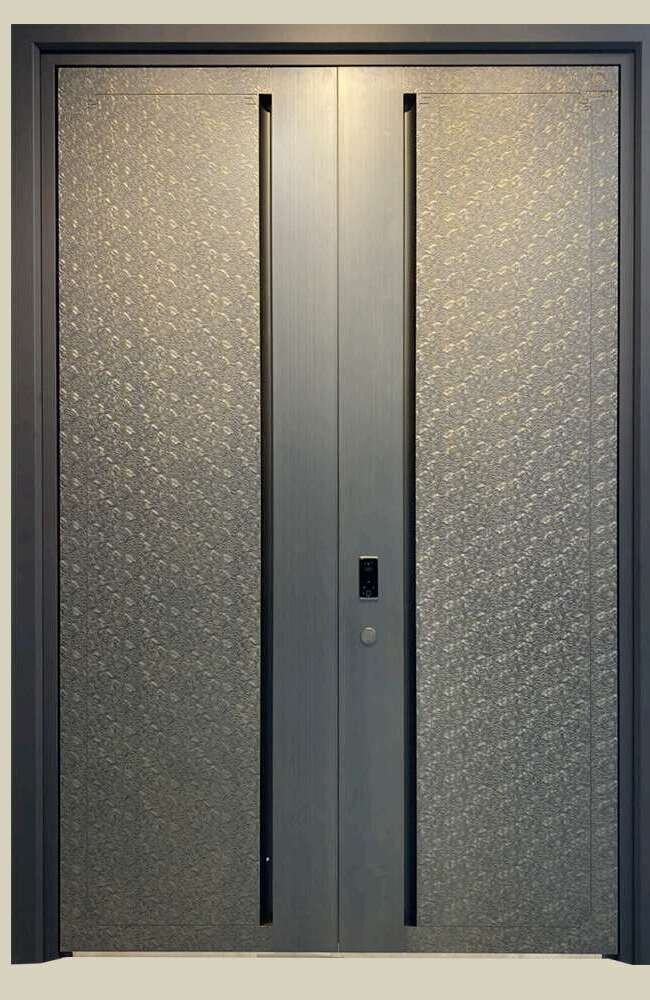
Begin with the complete entrance
A material can have low thermal conductivity and a seal can have useful acoustic properties, but neither figure automatically becomes the performance of the installed entrance. Leaf size, frame geometry, threshold, glazing, lock preparation, seals, wall junction and installation all affect the result.
Three different kinds of claim
- A design concept describes the intended outcome, such as a quieter or more thermally stable entrance.
- A component value describes one material or part, such as the conductivity of an insulating strip.
- A tested assembly result applies to the specimen, size, hardware, threshold, method and boundary conditions recorded in a report.
These categories should never be treated as interchangeable. The 25°C expression used in EPIN TOMCIM's China-market material is a comfort concept, not a universal product rating. The 47 dB reference likewise needs the applicable acoustic metric, test method and specimen report before it is used in an international specification.
What the reference construction is trying to solve
The published 2547 approach combines a separated steel-frame construction with a PA66 GF25 insulating strip, an insulated and reinforced leaf, EPDM perimeter seals and a coordinated closing interface. Each element addresses a different path through which heat, air or sound may pass.

The principle is system coordination. A strong leaf cannot compensate for an uncontrolled frame-to-wall gap, and an effective seal cannot compensate for unsuitable hardware preparation or poor adjustment.
Evidence to request before approval
- The proposed elevation, section and opening configuration.
- The controlled bill of materials for the quoted construction.
- The complete-door test report relevant to the claimed thermal, acoustic or security result.
- The specimen size, glazing, lock, threshold and installation detail used for that test.
- A written statement identifying changes between the tested specimen and the proposed door.
- The destination-market compliance route and the party responsible for local approval.
Compare like with like
When reviewing two offers, align the performance metric, test method, unit, specimen and scope first. A component conductivity value should not be compared with a complete-door U-value, and an airborne sound result should not be compared with an unqualified “noise reduction” statement.
This technical note is adapted from an article first published by EPIN TOMCIM's official WeChat account on 22 May 2026. It intentionally reframes the original marketing expressions as due-diligence questions for international buyers. Exact values remain configuration-specific and must be confirmed against current controlled evidence.